Suggested URL Slug: weather-tomorrow
Planning your day ahead starts with knowing what the weather will be like tomorrow. Whether you are preparing for work, travelling, or planning outdoor activities, checking the latest weather forecast can help you make better decisions. In this guide, you can explore tomorrow’s weather conditions, expected temperatures, chances of rain, and other important updates for your local area.
How to Check the Weather Tomorrow in Your Area
The easiest way to find tomorrow’s weather is to use a reliable weather forecasting service that provides location-based updates. Instead of relying on a general forecast, enter your city, ZIP code, or allow location access to see conditions for the area where you live.
A local forecast can provide several useful details, including:
- Expected temperature: The predicted high and low temperatures for tomorrow.
- Rain chances: The probability of precipitation during different parts of the day.
- Wind conditions: Expected wind speed, direction, and possible gusts.
- Cloud cover: Whether the sky is expected to be clear, partly cloudy, or overcast.
- Weather alerts: Important warnings or advisories issued for your area.
Checking these details together gives you a clearer picture of what to expect rather than focusing only on the temperature.
Tomorrow’s Weather Forecast: What to Expect
Tomorrow’s weather forecast can look different depending on your location, the time of day, and changing atmospheric conditions. Some areas may experience sunny skies and comfortable temperatures, while others could see rain, stronger winds, or colder conditions.
For a more useful forecast, pay attention to the hourly outlook as well as the overall daily summary. A day that starts with sunshine may become cloudy later, and rainfall could be more likely during the afternoon or evening.
The following information is particularly useful when reviewing a forecast:
Morning Weather Conditions
The morning forecast helps you prepare for the start of your day. Temperature, cloud cover, wind, and the possibility of early rainfall can affect your commute and outdoor plans.
If temperatures are expected to be low, you may need an extra layer of clothing. On the other hand, a warmer morning may make walking, exercising, or travelling more comfortable.
It is also worth checking whether fog or reduced visibility is expected, particularly if you plan to drive early.
Afternoon Weather Conditions
Afternoon conditions can be quite different from those in the morning. Temperatures often reach their daily high during the afternoon, although the timing varies by season and location.
Check the afternoon forecast for possible thunderstorms, showers, strong winds, or unusually warm conditions. This information can help you decide whether to adjust outdoor activities or travel plans.
Evening and Night Weather
The evening forecast is useful if you expect to spend time outdoors after work or school. Temperatures may begin to fall, and wind or rain conditions can change as the day progresses.
Before heading out, check the expected evening temperature and whether precipitation is likely. This is especially helpful when planning outdoor dinners, events, or longer journeys.
What Will the Temperature Be Tomorrow?
Temperature is one of the first things people look for when checking the weather tomorrow. However, looking at only one temperature reading does not always provide enough information about how the day will feel.
Most daily forecasts include two important figures:
- High temperature: The highest expected temperature during the day.
- Low temperature: The lowest expected temperature, usually occurring overnight or around the early morning.
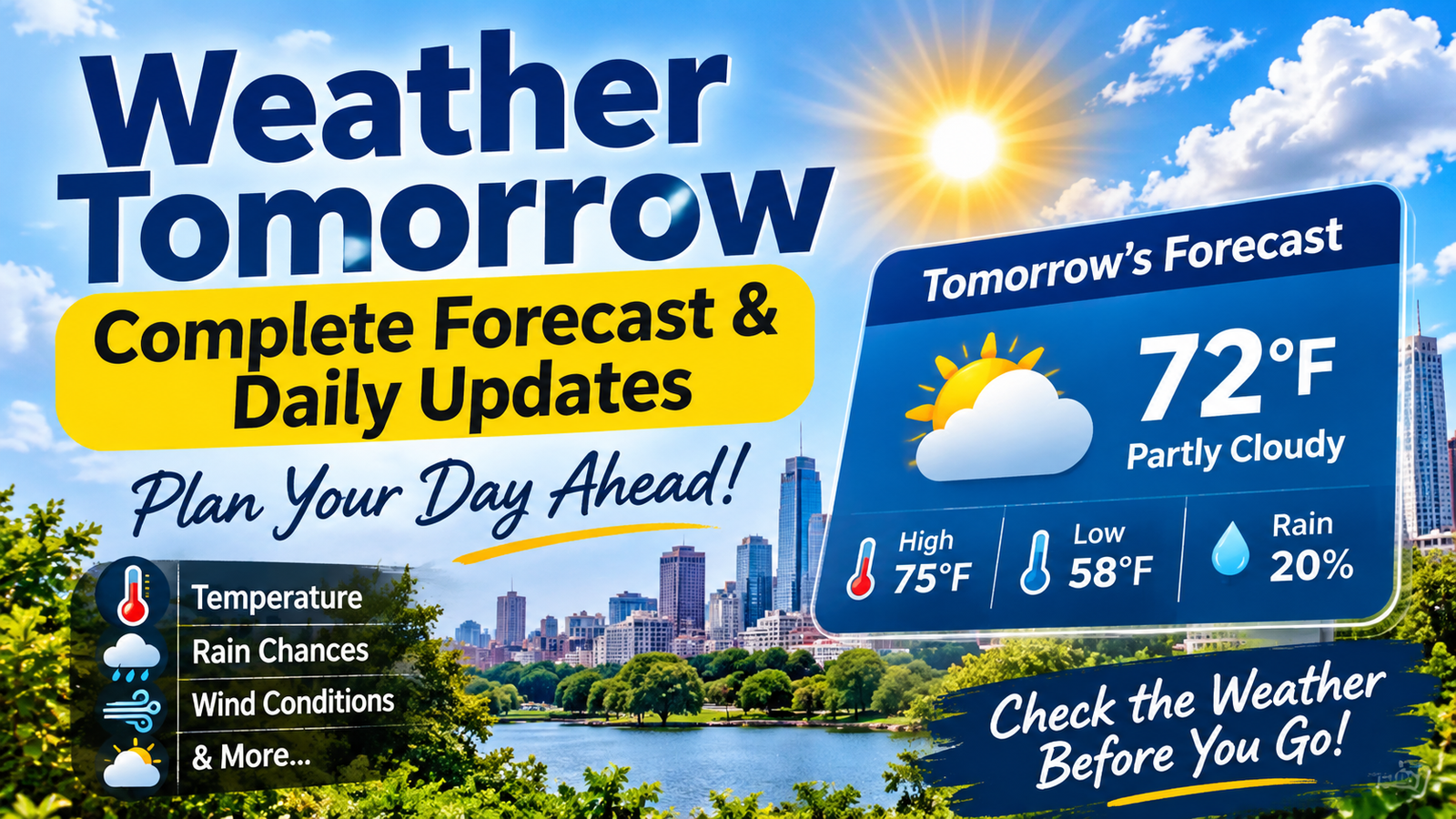
For example, a forecast showing a high of 75°F and a low of 55°F suggests a noticeable difference between daytime and nighttime conditions. You may feel comfortable in lighter clothing during the afternoon but need a jacket later in the evening.
Also consider the humidity and wind. High humidity can make warm weather feel more uncomfortable, while strong winds can make cooler temperatures feel colder.
For the most accurate picture, review the temperature forecast for your specific location rather than relying on a nationwide average.
Will It Rain Tomorrow?
Rain is another major reason people search for tomorrow’s weather forecast. Knowing whether showers or thunderstorms are expected can help you decide what to wear, when to travel, and whether outdoor plans need changing.
When checking the possibility of rain, look at these details:
Chance of precipitation: This percentage represents the forecast probability of precipitation for a particular location and period. It does not tell you exactly how long it will rain or how much rainfall will occur.
Expected rainfall amount: Some forecasts estimate the amount of rain expected over a specific period. This can help you understand whether light showers or heavier rainfall may be possible.
Timing of rainfall: Hourly forecasts can indicate when rain is most likely to occur. This is useful if you need to plan activities around changing conditions.
Thunderstorm potential: If thunderstorms are expected, pay attention to local weather alerts and official safety guidance.
A small chance of rain does not necessarily mean you should cancel your plans. However, it is sensible to carry an umbrella or prepare an alternative arrangement when showers are possible.
How to Check Tomorrow’s Weather Hour by Hour
A daily forecast provides a general overview, but an hourly forecast offers more detail about how conditions may change throughout the day.
For example, you might want to know whether rain is expected before your morning commute or whether temperatures will become more comfortable later in the afternoon.
To check tomorrow’s weather hour by hour:
- Open a reliable weather website or forecasting application.
- Search for your city or enter your ZIP code.
- Select the daily forecast for tomorrow.
- Find the hourly forecast section.
- Review the expected temperature, precipitation, wind, and cloud conditions.
- Check again later because forecasts can change as new information becomes available.
Hourly forecasts are especially helpful for people who work outdoors, travel frequently, or have activities scheduled at specific times.
How Wind and Humidity Affect Tomorrow’s Weather
Temperature and rainfall are important, but they are not the only factors that determine how comfortable the weather will feel.
Wind and humidity can make a noticeable difference to outdoor conditions.
Wind Speed and Direction
Wind forecasts help you understand how air movement may affect your local area. Strong winds can make outdoor activities uncomfortable and may create difficult conditions for driving, boating, or cycling.
Pay attention to wind gusts as well as average wind speed. Gusts can be considerably stronger than the general wind conditions reported in a daily forecast.
Humidity Levels
Humidity describes the amount of moisture in the air. When humidity is high, warm weather can feel hotter and more uncomfortable because sweat evaporates less efficiently.
Lower humidity can make warm temperatures feel more manageable, although the overall experience also depends on wind, sunlight, and individual conditions.
Checking both factors alongside temperature gives you a better understanding of how tomorrow’s weather may feel.
Weather Alerts and Warnings to Check Before Going Outside
Before making travel or outdoor plans, check whether any official weather alerts have been issued for your location.
Weather alerts can cover several types of conditions, including:
- Severe thunderstorms
- Heavy rainfall and flooding
- Tornadoes
- Winter storms and snowfall
- Extreme heat
- Strong winds
- Dense fog
In the United States, the National Weather Service (NWS) provides official forecasts, watches, warnings, and weather advisories.
A weather watch generally means conditions are favorable for a particular weather hazard, while a warning indicates that hazardous conditions are occurring or expected. Always follow the instructions provided by local authorities.
You can check official forecasts and alerts through the National Weather Service website at https://www.weather.gov/.
Best Ways to Prepare for Tomorrow’s Weather
Once you know what conditions are expected, a few simple preparations can make your day easier.
Check the forecast before going to bed: Review the latest weather information so you have an idea of what to expect in the morning.
Choose suitable clothing: Consider the expected high and low temperatures, wind, and rainfall when selecting your outfit.
Prepare for possible rain: Keep an umbrella or waterproof jacket available if showers are in the forecast.
Plan your travel: Allow extra time if rain, fog, snow, or strong winds could affect road conditions.
Review weather alerts: Check official warnings before travelling or participating in outdoor activities.
Check the forecast again in the morning: Weather predictions can change, so reviewing updated information helps you make better decisions.
These small steps can help you avoid unnecessary inconvenience and adjust your schedule when conditions change.
Why Does Tomorrow’s Weather Forecast Sometimes Change?
Weather forecasts are based on observations, computer models, and scientific calculations that estimate how atmospheric conditions will develop.
However, the atmosphere is constantly changing. New observations can reveal differences in temperature, air pressure, wind patterns, and moisture levels. These changes may affect the predicted timing or intensity of rain, storms, and other weather conditions.
This is why the forecast you check today may look slightly different tomorrow morning.
Forecast uncertainty also tends to increase further into the future. Predictions for the next 24 hours are generally more reliable than forecasts made several days or weeks ahead, although accuracy still depends on the location and weather situation.
For this reason, it is a good idea to check updated forecasts rather than treating an earlier prediction as guaranteed.
Frequently Asked Questions About Weather Tomorrow
1. How can I check the weather tomorrow?
You can check tomorrow’s weather through a trusted weather website or mobile application. Enter your city or ZIP code to see the expected temperature, rainfall chances, wind conditions, and hourly forecast.
2. What will the weather be like tomorrow?
Tomorrow’s weather depends on your location. Some places may experience sunshine and warm temperatures, while others could have cloudy skies, rain, or colder conditions. Check a local forecast for accurate information.
3. Will it rain tomorrow in my area?
To find out whether rain is expected, check the precipitation probability and hourly forecast for your location. These details can help you understand when showers may occur and how likely they are.
4. What will the temperature be tomorrow morning?
The expected morning temperature varies by location and season. Check the hourly forecast to see the predicted temperature around sunrise and during your usual morning activities.
5. Where can I find tomorrow’s weather forecast?
You can find local weather forecasts through the National Weather Service, established weather websites, and reliable forecasting applications. Enter your location to receive relevant updates.
6. Is the weather forecast for tomorrow always accurate?
No forecast is guaranteed to be completely accurate. Predictions are based on available observations and weather models, and conditions can change. Checking updated forecasts helps you stay informed.
7. What is the difference between a daily and hourly weather forecast?
A daily forecast provides a general summary of expected conditions, including high and low temperatures. An hourly forecast gives more detailed information about temperature, rainfall, and wind throughout the day.
8. Should I check tomorrow’s weather before travelling?
Yes. Reviewing the forecast before travelling can help you prepare for rain, strong winds, fog, snow, or extreme temperatures. It is also important to check official weather alerts for your route and destination.
Conclusion
Checking the weather tomorrow is a simple way to prepare for your daily activities and avoid unexpected changes in conditions. From morning temperatures and afternoon rainfall to evening winds and possible weather alerts, each part of the forecast can help you make better plans.
For the most useful information, always check a location-specific forecast and review the hourly outlook when timing matters. Remember that weather predictions can change, so checking updated information before leaving home is a sensible habit.